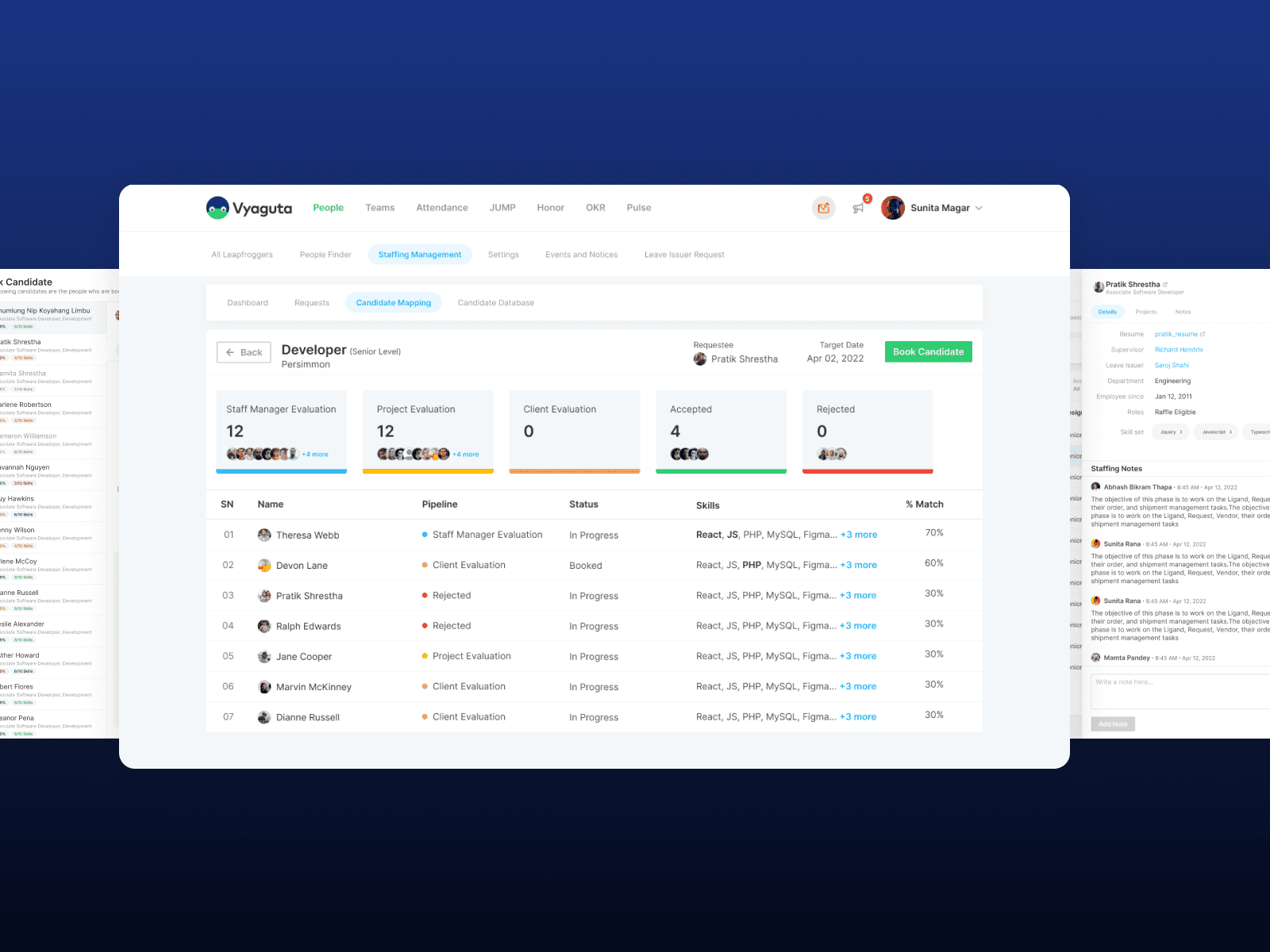
Overview
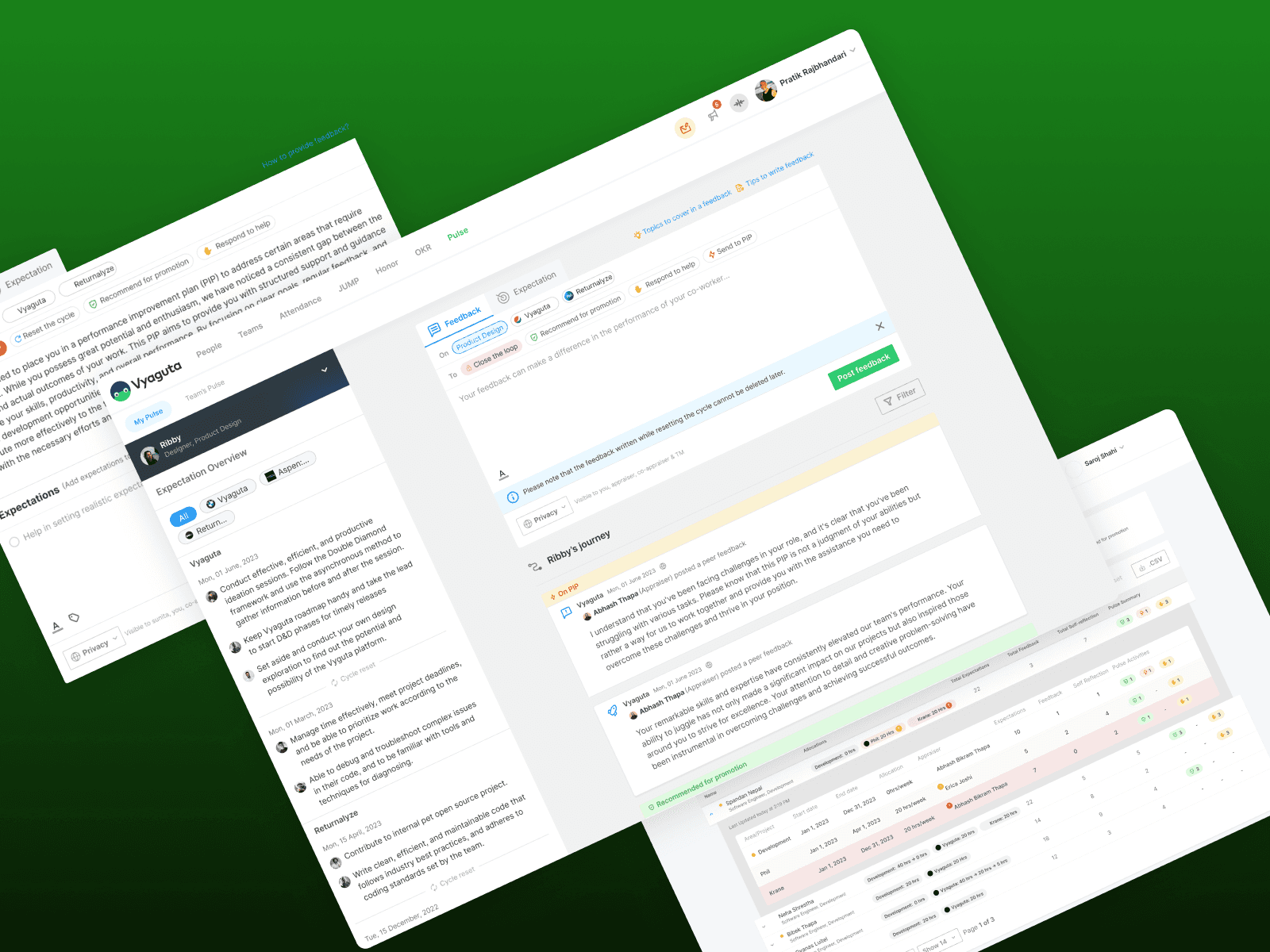
Leapfrog Technology faced challenges with slow internal staffing processes caused by fragmented communication and excessive coordination efforts. The goal was to design a system that improved efficiency, minimized meetings, and increased user satisfaction.
Challenge
The staffing teams struggled with unclear responsibilities, slow allocation times, and frequent meetings that disrupted productivity. The existing process caused frustration among HR, project managers, and team leads.
Role
As the Product Designer, I led the end-to-end design process—from research to delivery—working closely with cross-functional teams including HR, project managers, and developers.
Design Process
User Research & Discovery:
Conducted interviews with stakeholders and ran user surveys to identify pain points and bottlenecks in the current staffing workflow.Ideation & Mapping:
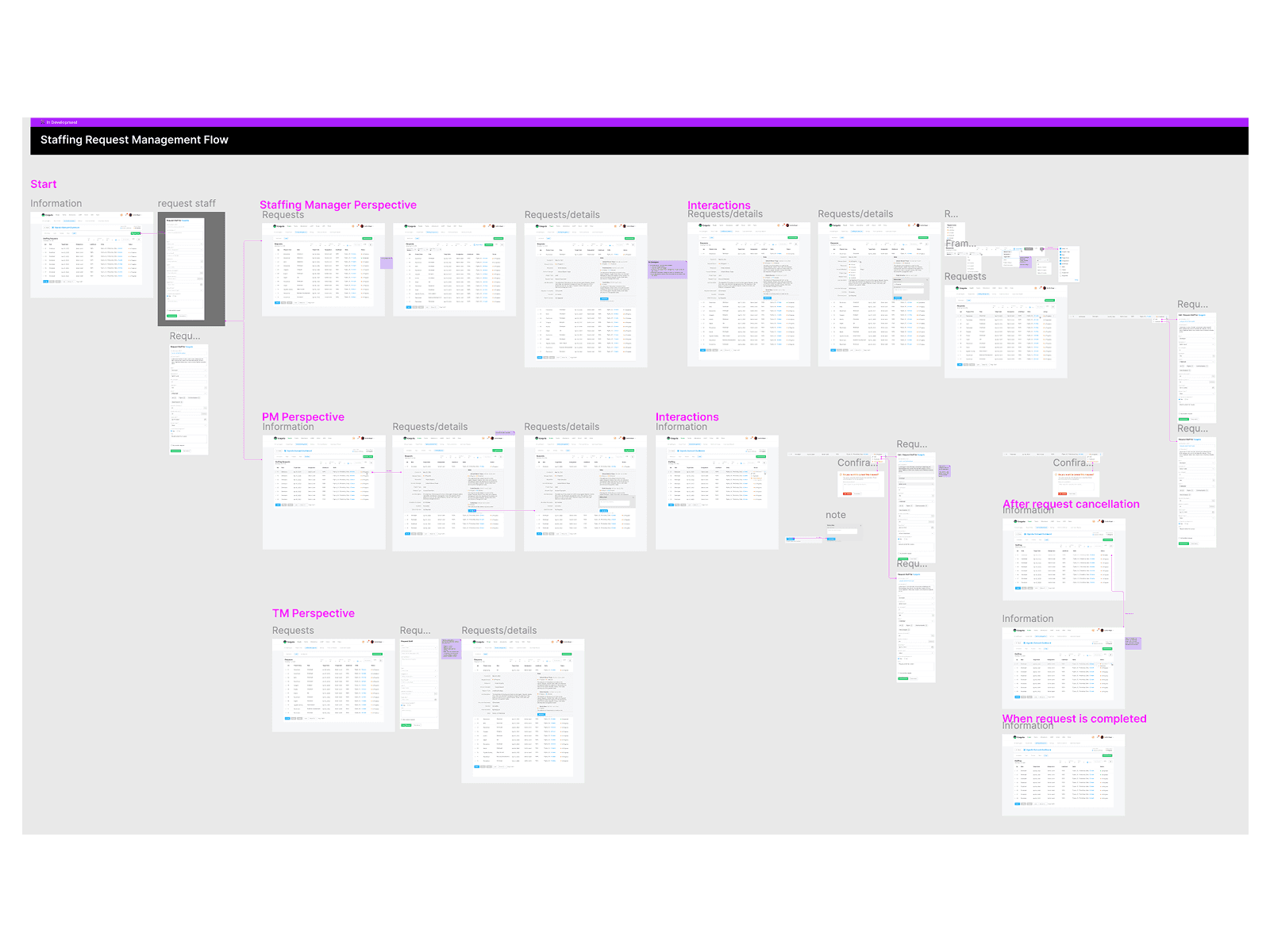
Developed clear information architecture and new user flows to clarify roles, automate status updates, and reduce manual coordination.Prototyping & Testing:
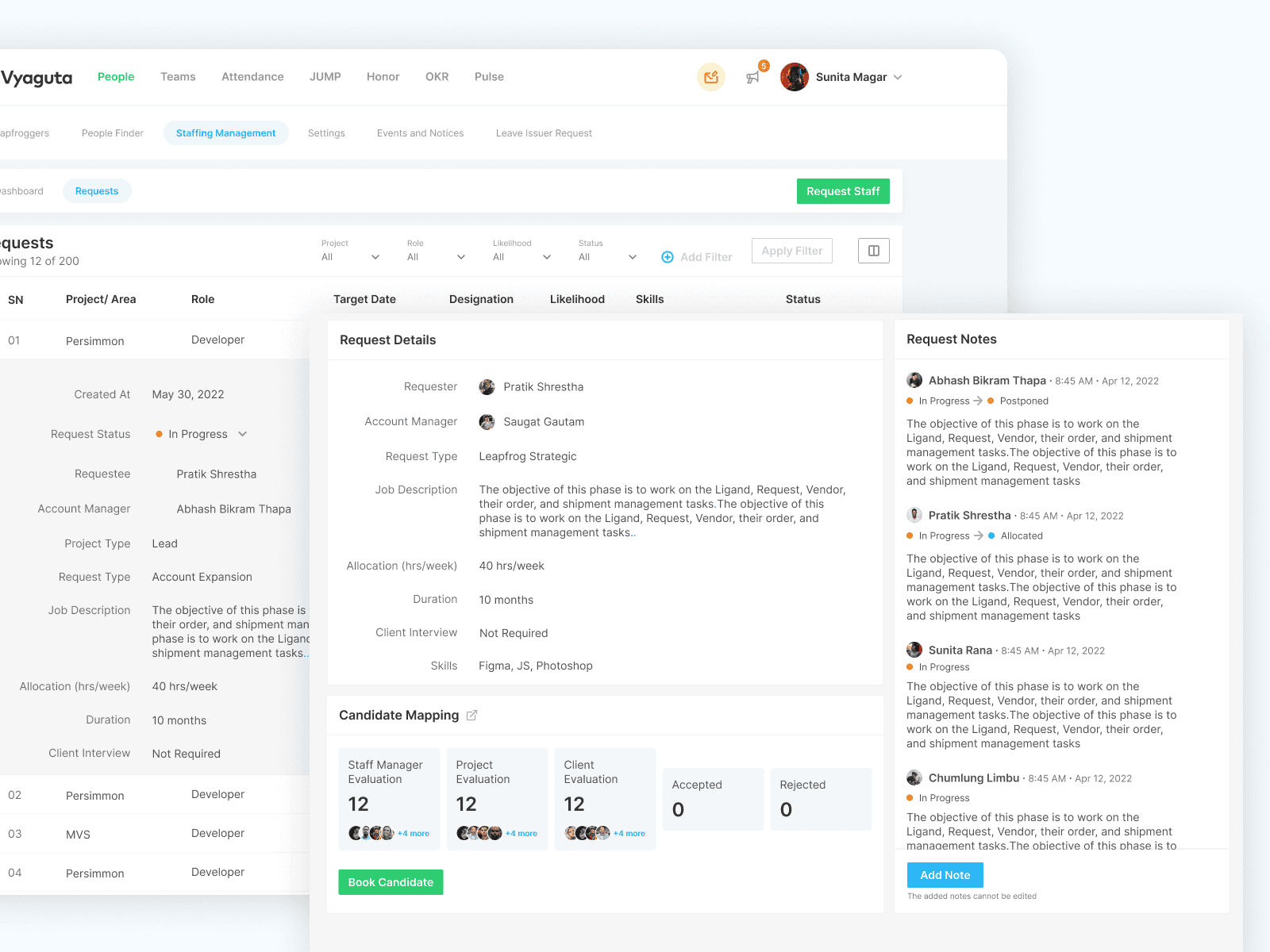
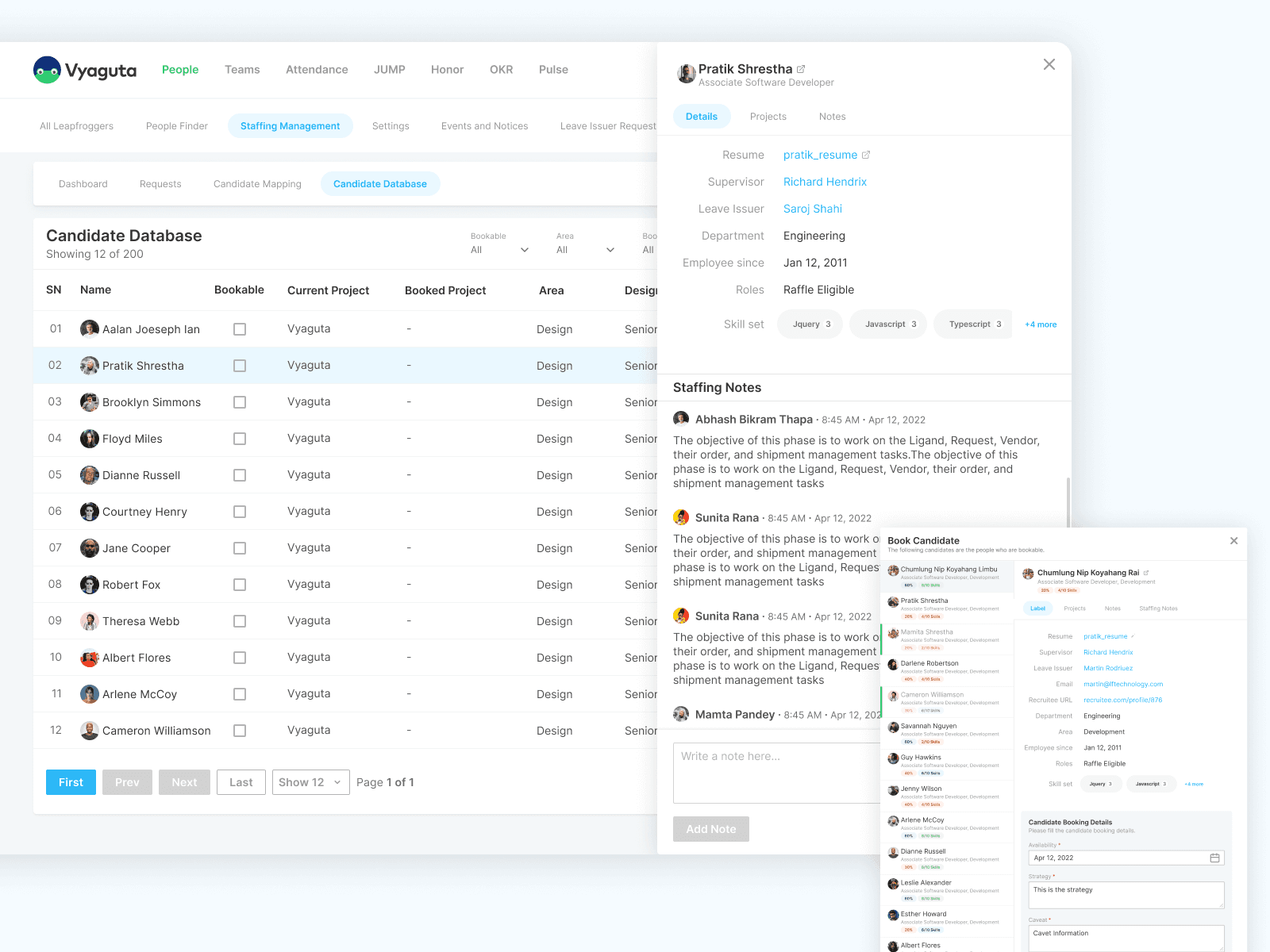
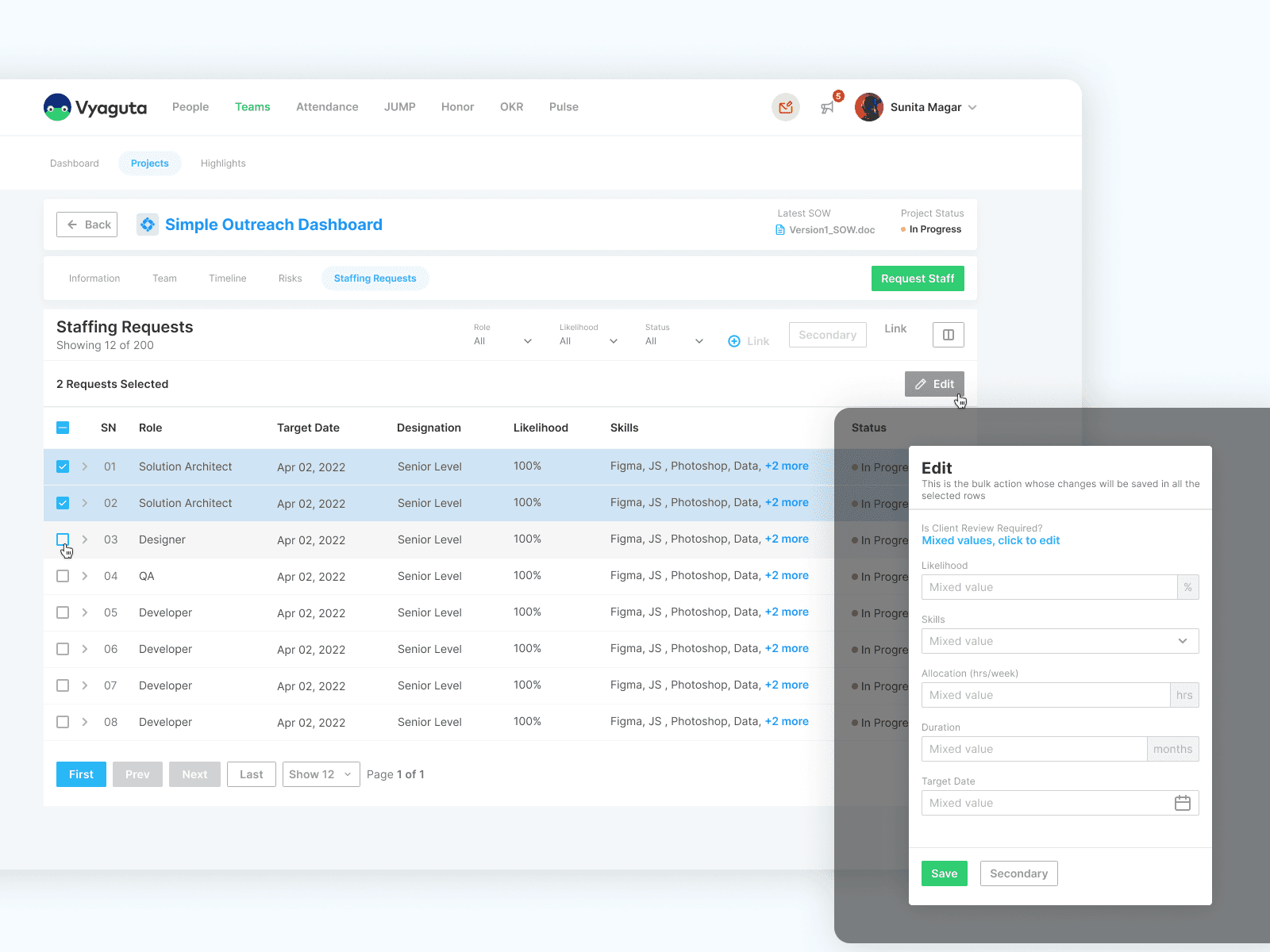
Created interactive prototypes in Figma to visualize the staffing dashboard and workflow enhancements. Ran iterative usability tests with end users to refine layout and interactions.Collaboration & Delivery:
Partnered closely with developers to ensure high-fidelity implementation. Documented design system components to foster consistency and scalability for future updates.
Outcomes
Reduced coordination time between teams by 65%
Decreased internal staffing meetings by 80%
Accelerated placement speed by 60%
Achieved over 90% user satisfaction in post-launch surveys
Reflection & Learnings
Early and continuous stakeholder engagement was key to uncovering hidden challenges and securing buy-in. Iterative testing with user feedback allowed for quick refinements, resulting in strong adoption of the new system. Building a modular design system laid the foundation for ongoing improvements and scalable design practices.